AI video generation has moved far beyond simple slideshow makers. Modern AI can analyze content, select visual elements, create animations, and produce professional-quality short-form videos in seconds. Here's how the technology actually works.
The AI Video Pipeline
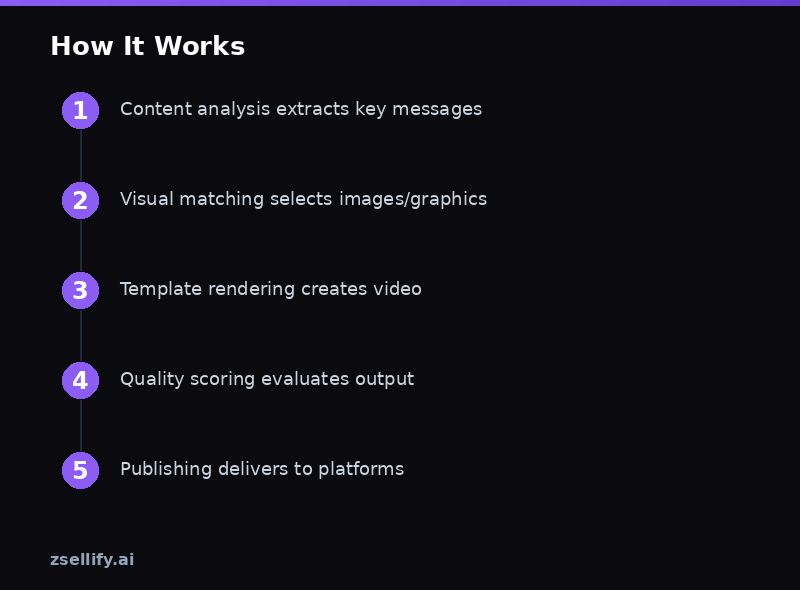
Modern AI video generation follows a sophisticated pipeline: Content analysis extracts key messages, facts, and emotional hooks from source text. Visual matching selects relevant images, graphics, and background elements. Template rendering combines text, visuals, and animations into a cohesive video. Quality scoring evaluates the final product against engagement benchmarks.
Content Intelligence
The most important step is content intelligence — the AI's ability to identify which parts of your content will make compelling videos. Advanced platforms score content based on emotional triggers, specificity, controversy potential, and hook strength.
Template-Based vs Generative
Current AI video tools fall into two categories. Template-based systems use pre-designed layouts and fill them with your content — this produces consistent, professional results. Fully generative systems attempt to create videos from scratch — impressive but often unpredictable in quality.
zSellify uses a template-based approach with AI-powered content selection, combining reliability with intelligence.
Quality vs Speed
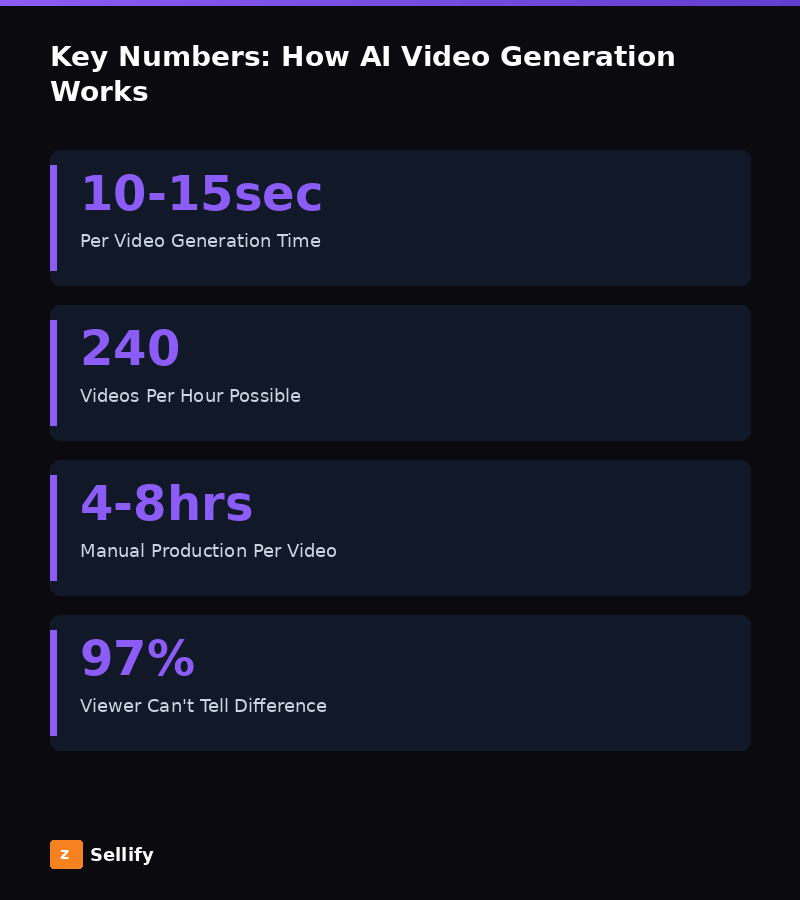
The best AI video platforms generate a professional short-form video in 10-15 seconds. That's 240 videos per hour if needed. Compare this to 4-8 hours for manual production. The quality gap has narrowed dramatically — most viewers can't distinguish AI-generated short-form content from manually produced videos.
The real advantage isn't just speed — it's consistency at scale.