Most businesses approach content marketing with a content calendar — a spreadsheet of planned posts and deadlines. But calendars have a fatal flaw: they depend on consistent human execution. A content engine is fundamentally different.
The Content Calendar Problem
Content calendars fail for predictable reasons: key team members get busy, quality varies with who's creating that week, gaps appear during holidays or busy periods, and the calendar itself becomes a burden to maintain.
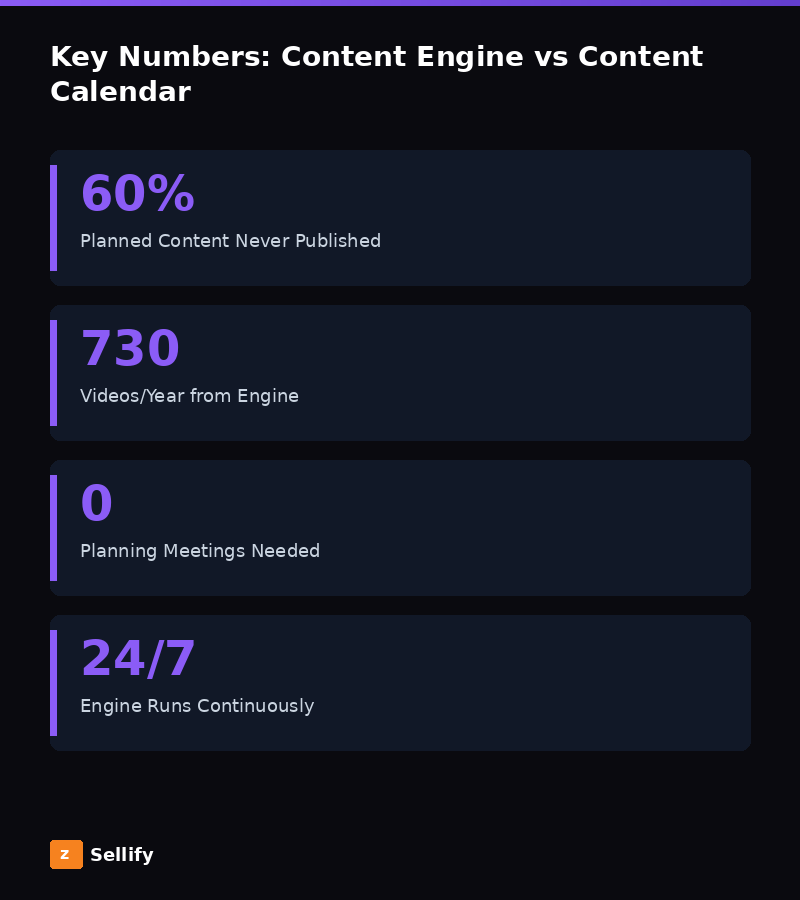
Research shows that 60% of planned social media content never gets published. The content calendar creates an illusion of productivity without guaranteeing output.
What Is a Content Engine?
A content engine is an automated system that continuously generates and publishes content without ongoing human intervention. Once configured, it runs on its own. Your business doesn't need content anymore — it needs a content engine.
Building Your Content Engine
Step 1: Create a content-rich website (your fuel source). Step 2: Connect a video presence infrastructure platform. Step 3: Set up your publishing schedule. Step 4: Monitor and optimize occasionally.
The engine runs whether you're on vacation, sick, or focused on other priorities. It never misses a publishing deadline because there are no deadlines — just continuous output.
Content Calendar vs Content Engine
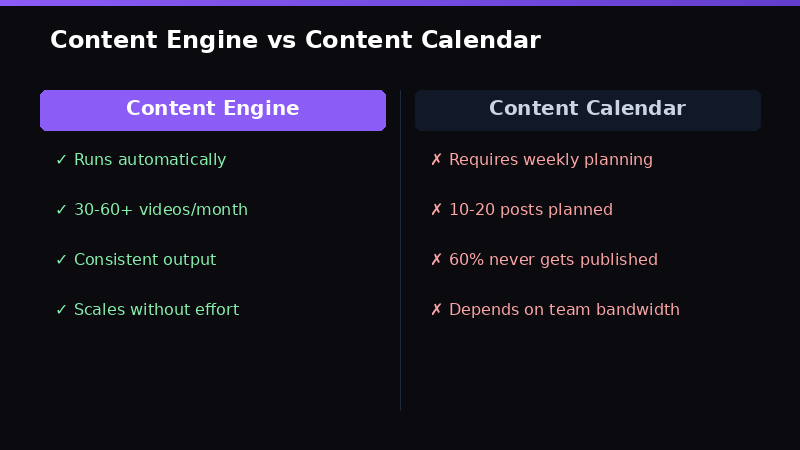
Calendar: Plans 10-20 posts/month, requires weekly planning meetings, depends on team availability, output varies.
Engine: Produces 30-60+ videos/month, runs automatically after setup, consistent regardless of team availability, scales to 730 videos/year.