
Video SEO is no longer optional. Google now displays video results for over 30% of search queries. If your business isn't creating video content optimized for search, you're missing a significant traffic source.
How Google Indexes Video Content
Google indexes videos primarily from YouTube, but also from websites with proper video schema markup. When a user searches for a topic, Google may display a video carousel, a featured video snippet, or include video results in the main search listings.
The key insight: YouTube Shorts are indexed by Google just like regular YouTube videos. This means short-form content can rank for search queries and drive organic traffic.

Optimizing Video Titles and Descriptions
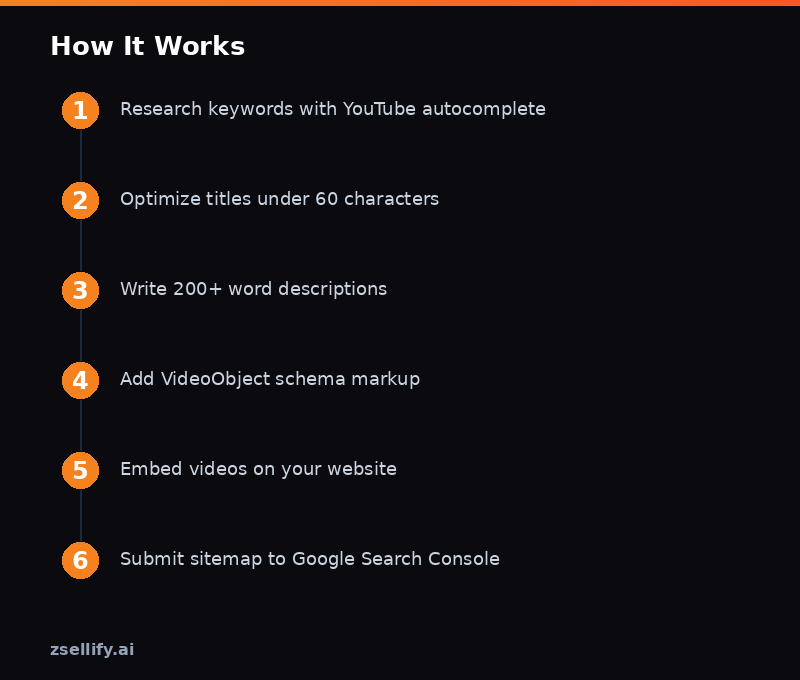
Your video title should include the primary keyword naturally. Keep titles under 60 characters for full display in search results. Use our Headline Analyzer to score your video titles before publishing.
Descriptions should be at least 200 words and include relevant keywords, links to your website, and a clear call to action. Think of your video description as a mini blog post.
The Power of Consistent Publishing
YouTube's algorithm rewards consistency. Channels that publish regularly get more impressions and better ranking signals. This is where automated publishing becomes essential — maintaining a daily posting schedule manually is nearly impossible for most businesses.
Video Schema Markup
If you embed videos on your website, add VideoObject schema markup. This helps Google understand your video content and can result in rich snippets in search results. Use our YouTube Embed Generator to create properly formatted embed codes.
Measuring Video SEO Performance
Track impressions and click-through rates in YouTube Studio. Monitor which search queries drive views using the "Traffic Source: YouTube Search" report. Combine this with Google Search Console data to see how your videos appear in Google results.